
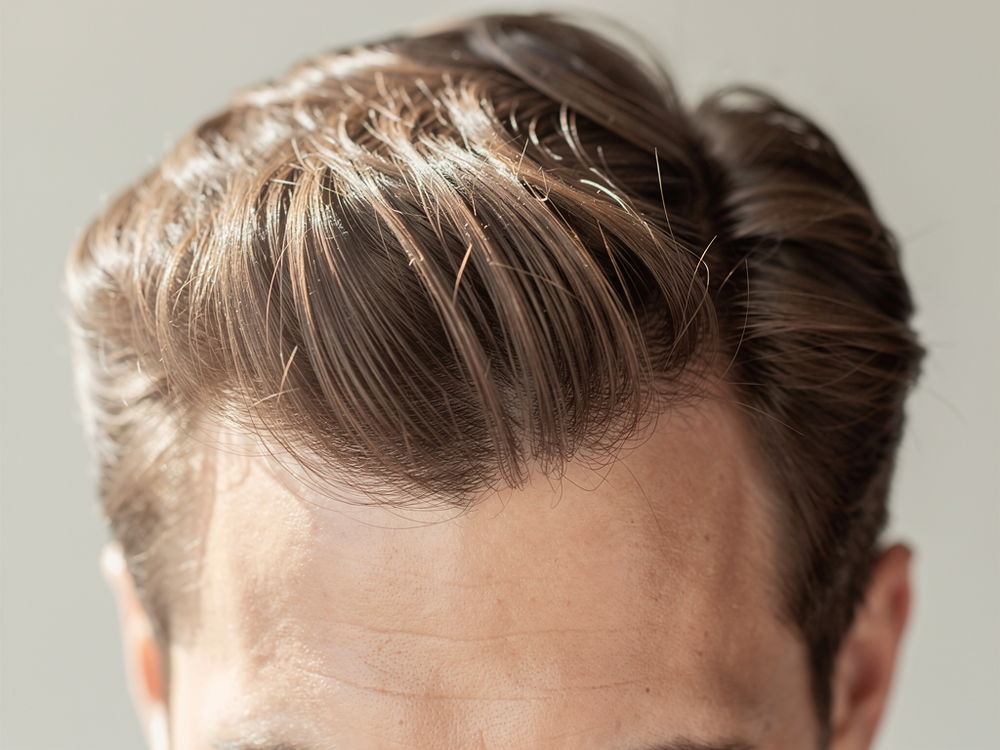
For the health-conscious man in his 30s, a thinning crown can feel like a personal betrayal. You’re at the top of your professional game, you prioritize clean eating and regular workouts, and your annual physical comes back with perfect scores. Yet, there it is—increasing scalp visibility at the crown that no amount of spinach or squats seems to fix. This specific, frustrating scenario is exploding across men’s health forums, where threads are filled with men in their prime asking the same desperate question: “Why is this happening to me?” The standard medical response—“it’s just genetics”—feels dismissive when you’re living a textbook healthy life. This article exists to bridge that gap, explaining the complex collision between your disciplined lifestyle and the biological realities of early crown thinning.
The Invisible Failure: Why Gym and Diet Aren't Stopping Crown Loss
The core frustration is captured perfectly by the search query: “why is my crown thinning at 32 even though I eat clean and lift weights?” You’ve built a temple, but the roof is leaking. It’s crucial to understand that diet and exercise operate on a systemic, whole-body level. They improve cardiovascular health, optimize hormone profiles, and enhance nutrient delivery—all of which create a better environment for hair in general. However, male pattern hair loss (androgenetic alopecia) is a localized, genetic condition. It targets specific follicles on the crown and hairline that are programmed to be hypersensitive to a hormone byproduct called dihydrotestosterone (DHT). Think of it like having the finest irrigation system for a garden, but certain plants have a genetic code that causes them to wither when exposed to a specific, naturally occurring compound in the water. Your clean diet and heavy lifts don’t alter that fundamental genetic code within each vulnerable follicle. They support the body, but they cannot rewrite its DNA.

Biological Mechanism: DHT Sensitivity Accelerating in Stressed 30s
The engine of this process is androgenetic alopecia, a term that combines “androgen” (male hormones) and “genetic” (inherited). The culprit isn’t high testosterone, but rather the conversion of testosterone into DHT via an enzyme called 5-alpha reductase. For genetically predisposed men, DHT binds to receptors in hair follicles on the crown and temples, triggering a gradual process called miniaturization. Over successive growth cycles, affected follicles produce thinner, shorter, and lighter hairs until they eventually stop producing visible hair altogether. Androgenetic alopecia.
Your 30s are often the decade where this process shifts from a theoretical risk to a visible reality. Hormonal shifts that are a normal part of aging can increase the expression of the 5-alpha reductase enzyme or the sensitivity of follicle receptors. This is why crown balding in your 30s can seem to appear suddenly, even if the genetic predisposition was always there.
DHT Sensitivity Despite No Family History
A major point of confusion is the apparent lack of family history. You might look at a father or grandfather with a full head of hair and feel baffled. The genetics of hair loss are polygenic and complex, often inherited from either parent. The key gene locus for androgen receptor sensitivity is on the X chromosome, which men inherit from their mother. Furthermore, gene expression is influenced by a myriad of factors. You may have inherited a combination of genes that only manifest under your specific unique hormonal milieu and life stressors of your 30s, explaining why this feels like it came out of nowhere.
Why Normal Labs Miss Genetic Triggers
This is where the doctor’s “normal” blood test becomes a source of frustration. Standard panels screen for systemic issues: thyroid dysfunction, significant anemia, or dramatic hormonal imbalances. When these are within range, the clinical conclusion is often “benign genetic hair loss.” What these tests completely miss is the microscopic battlefield on your scalp. They do not measure:
- Localized scalp DHT concentration.
- The density of DHT receptors in your crown follicles.
- The level of chronic, low-grade inflammation in your scalp tissue.
A “normal” lab result simply means there isn’t a systemic disease causing hair loss; it doesn’t mean there isn’t a potent, localized genetic process happening.
This is a common concern, and there are ways to address it. Let's consider how modern lifestyles may contribute to this issue.
Life Context Deep-Dive: How Desk Jobs and Career Stress Sabotage Follicles
This is where your modern 30s lifestyle acts not as a cause, but as a powerful accelerant, pouring gasoline on the genetic fire. While you’re mitigating risk with diet and exercise, other professional realities are introducing new ones.
Chronic stress, whether from quarterly targets, managerial responsibilities, or financial pressure, elevates cortisol. Sustained high cortisol can both trigger a diffuse shedding called telogen effluvium—which hits the crown hard—and potentially upregulate androgen receptors, making follicles more sensitive to the DHT that’s already there. This creates a vicious cycle where stress accelerates loss, and the visible loss creates more stress. You might also be interested in how to increase libido after porn addiction in your 30s.
Furthermore, the desk job—a hallmark of the mid-career professional—presents a physical challenge. Hours of sustained posture, often with forward head position and tight neck and shoulder muscles, can impede optimal blood circulation to the scalp. Reduced blood flow means fewer nutrients and oxygen delivered to the very follicles that are under genetic attack. It’s a perfect storm: genetic sensitivity meets hormonal acceleration meets reduced logistical support. Men in this situation may also want to explore a testosterone recovery plan for sedentary men.
It's worth considering how to mitigate these lifestyle factors. There are strategies to help.
Why Common Protocols Stop Working After Initial Gains
Scrolling through forums reveals a second wave of despair: men who started treatments early, saw promising results, only to feel abandoned years later. Posts about finasteride “stopped working” or minoxidil not seeing results anymore are common. This isn’t always a case of true treatment failure, but often a misunderstanding of what these interventions do.
Finasteride works by systemically reducing DHT production. It is highly effective at slowing or halting miniaturization for the vast majority of users. However, “effective” does not mean “a complete and permanent freeze.” The genetic process may continue at a much slower rate, or other factors (like a period of intense stress) may cause a shed that reveals further progression. The initial dramatic gain often comes from reversing recent miniaturization; maintaining that gain for a decade is a different, less noticeable battle.
Scientific Evidence
Minoxidil is not a DHT blocker. It’s a vasodilator that pushes follicles into a longer growth phase. For a man with active crown thinning, it’s like providing extra fertilizer to plants that are being slowly poisoned. It can produce great growth for a time, but if the DHT attack continues unabated, it will eventually outpace minoxidil’s supportive effect, leading to the perception it has “stopped working.” This is why combination therapy is often emphasized—tackling both the trigger (DHT) and the growth environment. You may also want to consider how to boost male libido naturally after 45 with home remedies.
Evaluating Your Management Strategy: A Realistic Comparison
Choosing a path forward requires aligning your approach with your goals, commitment level, and the stage of your thinning. There is no one-size-fits-all solution, especially for the health-conscious man who may be wary of medications or seeking a holistic plan. The following table outlines realistic strategic categories, not specific products, to help frame your decision.
| Approach | Best For | Timeline for Expectation | Key Consideration |
|---|---|---|---|
| Lifestyle Optimization Only | Men with very early, minimal thinning who prioritize natural interventions and are monitoring closely. Focuses on stress, sleep, diet, and scalp care. | 6-12 months to assess stabilization. Regrowth is unlikely; goal is to slow progression. | May not be sufficient to counter strong genetic predisposition. Requires impeccable consistency and serves best as a foundational support for any other approach. |
| Topical & Supplemental Support | Those noticing clear progression who want to intervene beyond lifestyle but prefer to avoid oral prescription medications initially. | 9-12 months to evaluate efficacy. Initial shedding with treatments like minoxidil is common and a sign of activity. | Can become complex and costly. Without addressing DHT systemically, progression may continue underneath the support, leading to long-term frustration. |
| Combined Medical Protocol | Men with definite, progressive crown thinning seeking the highest probability of stabilization. Combines a DHT inhibitor (like finasteride) with a growth stimulant (like minoxidil). | 12-18 months for full assessment. The first year often involves shedding phases and gradual strengthening. | Requires a commitment to long-term, daily use and consultation with a dermatologist. Potential for side effects exists and should be discussed in detail with a physician. |
| Advanced Medical & Procedural | Individuals with more advanced loss where medication alone cannot restore density, or those who have stabilized loss and wish to rebuild. | Procedures like hair transplantation show results at 12-18 months. Always combined with medical therapy to protect non-transplanted hair. | High financial investment. Success is entirely dependent on the skill of the surgeon and the stability of your underlying hair loss via medication first. |
The Integrated Path Forward: Adapting to Early Crown Thinning Realities
Acceptance is your first strategic move: accepting that your excellent lifestyle is necessary armor, but not an impenetrable shield. Your new goal is a multi-layered follicle protection plan. This means if you choose medical treatments, you commit to them as a long-term maintenance protocol, like brushing your teeth. It also means doubling down on the accelerants you can control with surgical precision.
Beyond the gym, this means prioritizing sleep hygiene—the foundation of hormone regulation and recovery. It means integrating genuine stress-downshifting practices, not just intense workouts which can be physiologically stressful. Meditation, breathwork, or even scheduled downtime are non-negotiable. Nutritionally, ensure your clean diet explicitly includes ample protein (the building block of hair), zinc, iron (ferritin stores above 70 ng/mL are often cited as optimal for hair), and omega-3 fatty acids to manage inflammation, even if your basic bloodwork is “normal.”
When and How to Escalate Your Approach
If self-managed optimization isn’t halting the progression you see in monthly photos, it’s time to engage a specialist. Seek a board-certified dermatologist with a stated interest in hair loss, not a general practitioner. The specialist’s toolkit is different. They will likely use a dermatoscope or trichoscope—a handheld magnifying tool—to examine your scalp closely. This allows them to see the percentage of miniaturized hairs on your crown, confirming the pattern of genetic loss and ruling out other mimics.
This consultation is where you move from generic advice to a personalized plan. You can have an informed discussion about prescription options, their mechanisms, and their safety profile in the context of your overall health. You can also discuss more nuanced testing, such as checking your ferritin (iron storage) or vitamin D levels, which have lower thresholds for hair health than general health.
Prevention and Mindset for the Lifestyle-Conscious Man
For the man who views his body as a system to be optimized, managing crown thinning is another facet of that optimization. It’s proactive maintenance. This includes physical protection: wearing a hat in strong sun to prevent UV damage to follicles and avoiding tight headwear or hairstyles that create tension on the crown. It’s about consistency in your chosen protocol.
Most critically, it requires a psychological shift. Your hair is a part of your appearance, but it is not your identity, your virility, or a report card on your health discipline. Separating your self-worth from your hairline is perhaps the most powerful anti-inflammatory intervention you can make. Reducing the anxiety and stress you feel about the loss directly removes one of the key accelerants of the process itself. Managing your crown thinning becomes a pragmatic health and grooming priority, freeing up mental energy for the career, relationships, and fitness that define your life in your 30s and beyond.
Frequently Asked Questions

A: It’s a very common and confusing scenario. Hair loss genetics are complex and polygenic, meaning many genes from both parents are involved. You can inherit the predisposition from your mother’s side, or it can be a combination of genes that simply didn’t express strongly in your relatives but do in your unique hormonal and environmental context. A lack of obvious baldness in your immediate family does not rule out a genetic tendency.
Q: Are treatments like finasteride safe for long-term use in my 30s?A: Finasteride has been FDA-approved for male pattern hair loss for decades and is considered safe for long-term use by the vast majority of men. As with any medication, it has a potential side effect profile, which a knowledgeable dermatologist should discuss with you transparently. The decision involves a personal risk-benefit analysis: weighing the well-documented efficacy in stabilizing hair loss against the possibility of side effects, which are often reversible upon discontinuation.
Q: How long should I try a new protocol before deciding it's not working?A: Extreme patience is required. Hair cycles are slow. You must commit to any new protocol—whether minoxidil, finasteride, or a major lifestyle shift—for a minimum of 12 months before assessing results. Initial shedding in the first 3-6 months is common and often a sign the treatment is actively working. Judge progress by comparing clear, consistent photographs taken monthly under the same lighting, not by daily observation in the mirror.
Q: If my blood tests are normal, what other tests should I ask for?A: Beyond a detailed scalp examination with a trichoscope, you can ask your doctor about more specific nutrient markers. Ferritin (iron storage) and vitamin D are two common ones where levels sufficient for general health may still be suboptimal for robust hair growth. In some cases, a scalp biopsy may be suggested to definitively rule out other types of alopecia, but it’s not routinely needed for classic male pattern loss.
Q: Can stress from a new job really cause permanent crown thinning?A: Stress alone typically causes a temporary shedding called telogen effluvium, which recovers once the stressor is managed. However, if you have an underlying genetic predisposition to crown thinning, a major stress event can trigger a massive shed that dramatically “unmasks” or accelerates the genetic pattern. The stress doesn’t create new genetic loss, but it can reveal it sooner and more severely, making the thinning appear sudden and permanent when it was actually a latent process brought to light.
📌 Love this guide? Save it on Pinterest!
Pin 30s Crown Thinning Mystery: Why It Happens Despite Healthy Living [2026] to your board so you can come back to it later.

